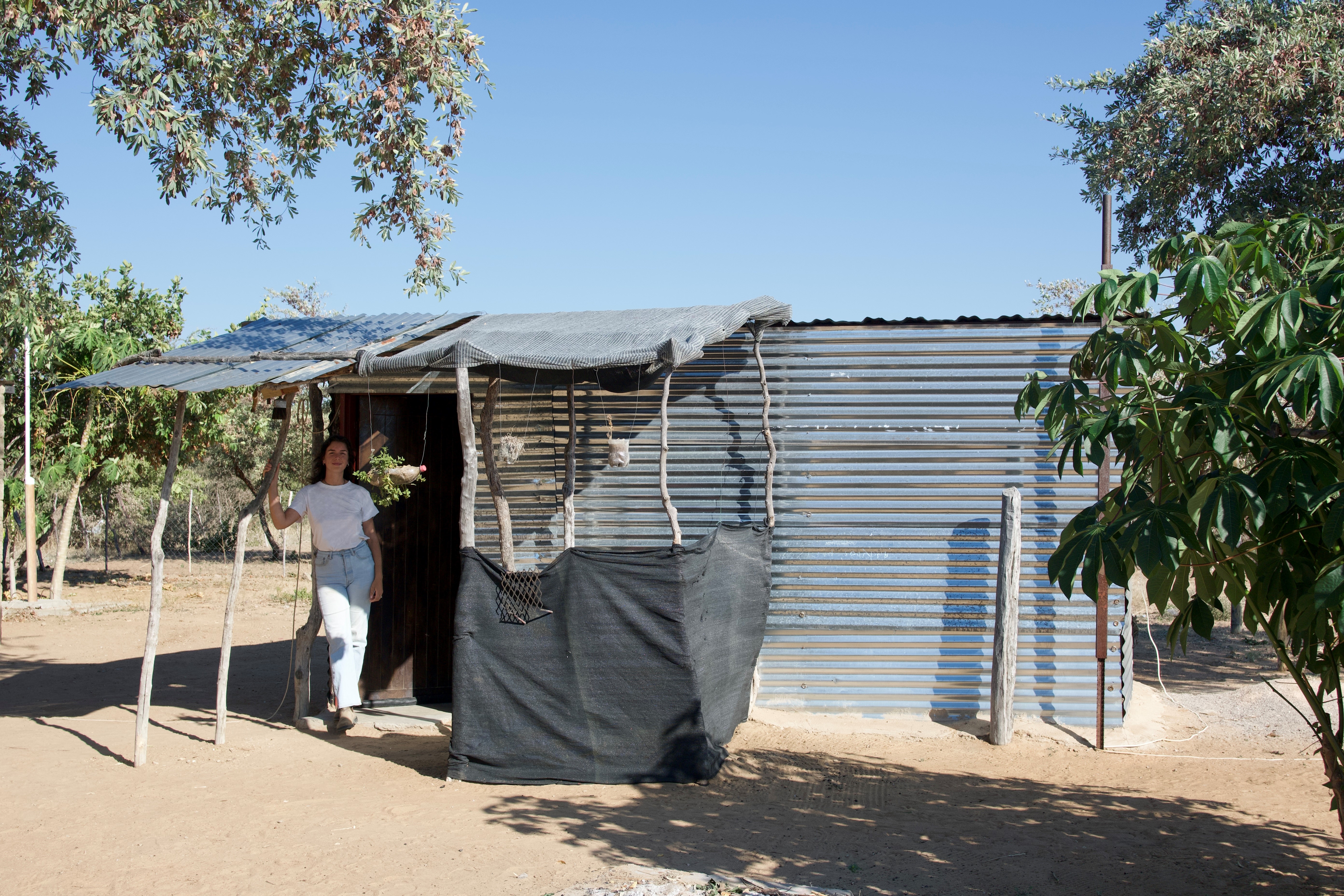
The new article is now published in a special issue, which concerns ‘Conservation and Land in Namibia’ in the Namibian Journal of Environment. Katharina Wahedi and I explore the situation of the Hai||om at the Tsintsabis resettlement farm. We used ethnographic research and sensorial mapping. Our findings reveal that many outside forces challenge the Hai||om’s ability to make a livelihood based on agriculture. See the full abstract underneath and a link to the article on the Publications page as usual. Thank you Katharina for a great collaboration on this!
Hai||om engagement with land and the environment: Livelihood challenges at Tsintsabis resettlement farm, Namibia
Abstract
Land is a complex issue. Ascribed economic, utilitarian, social and cultural values often conflict, challenging people’s livelihoods and their connection with land. In this paper, we explore contemporary land dynamics at the Tsintsabis resettlement farm, Oshikoto Region, Namibia, and how these dynamics shape the engagement of Hai//om people with their environment. Many Hai//om suffered a history of land dispossession, including their eviction from the Etosha National Park. Since Namibian Independence (1990), most struggle to sustain themselves, mainly relying on social grants and food aid. In the subsequent national resettlement scheme, group resettlement farms were established with the aim for self-sufficiency through small-scale agriculture. Based on long-term ethnographic fieldwork and sensorial mapping, we use Ingold’s ‘dwelling perspective’ to analyse Hai//om changed relationships with their interwoven natural and social environment. This perspective emphasises that humans and their environment are interconnected and interdependent. However, we argue that droughts, a lack of land rights, and illegal land deals challenge the ability of Hai//om to sustain themselves in this resettlement scheme that is largely based on agriculture.
 Stasja Koot